
Alembic, Tudor, Replica
Description
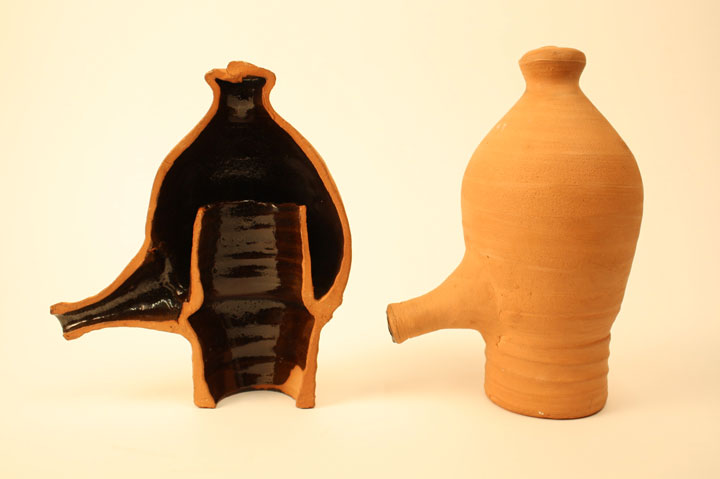
This alembic jar is halved so we can see inside. It is bell
shaped with a wide opening in the base, and has a single downward
pointing spout letting liquid pour from it. Inside there are two
compartments. The smaller is accessible from the hole in the base
and extends half way up the interior of the jar. The larger
compartment encloses the smaller, and is accessed by the
down-turned spout.
The alembic was used for distillationA method of separating mixtures based on differences in their boiling points. Distillation is a physical separation process, and not a chemical reaction. It is widely used today for refining oil and making alcohol. as a process of
alchemyA mixture of chemistry, philosophy and mysticism studied in Europe and the Middle East from early centuries BC to the seventeenth century and beyond. Alchemists tried to find the philosopher’s stone, a secret substance that could turn base metals to gold. The word alchemy, or Al-Kemi is thought to be derived from Arabic or Egyptian roots, meaning divine chemistry, or black earth, referring to the silt deposits created by the annual flooding of the Nile., with alchemists experimenting with changing
substances and materials. The inner compartment of the jar held the
liquid, which was heated by burning a flame in the hole in the
base. The liquid then turned into vapour that rose out of the inner
container, leaving the sediment behind. The vapour made contact
with the cooler walls of the outer container and turned back into
liquid. The distilled liquid was collected through the spout.
Distillation is widely used today for refining oil and making
alcohol.
Length:20cm
Larger Image
Glossary
- Alchemy
- A mixture of chemistry, philosophy and mysticism studied in Europe and the Middle East from early centuries BC to the seventeenth century and beyond. Alchemists tried to find the philosopher’s stone, a secret substance that could turn base metals to gold. The word alchemy, or Al-Kemi is thought to be derived from Arabic or Egyptian roots, meaning divine chemistry, or black earth, referring to the silt deposits created by the annual flooding of the Nile.
- Distillation
- A method of separating mixtures based on differences in their boiling points. Distillation is a physical separation process, and not a chemical reaction. It is widely used today for refining oil and making alcohol.