
Baby Bottle, Ancient Rome, Replica
Description
Not all liquids are of the same consistency; some liquids flow more
quickly than others. Some we may want to pour in small
quantities. So, bottle designers need to think about how the liquid
pours, and how the vessel will be used.
This is a replica of a Roman glass bottle. It is blown with a
handle created and attached separately. The neck and spout are very
narrow, indicating that liquid was poured from the bottle slowly
and in small qualities. And, as it was made for feeding a baby, the
design is perfect. The spout encouraged the baby to suck and
controlled the output of liquid. The handle was used by the mother
or nurse to make sure the baby couldn’t choke or suck in too much
air and become uncomfortable.
Bottles like this were also used for olive oil. The Romans used
oil, like we use butter, to moisten food such as bread. The narrow
spout ensures that your plate would not be flooded with too much
oil.
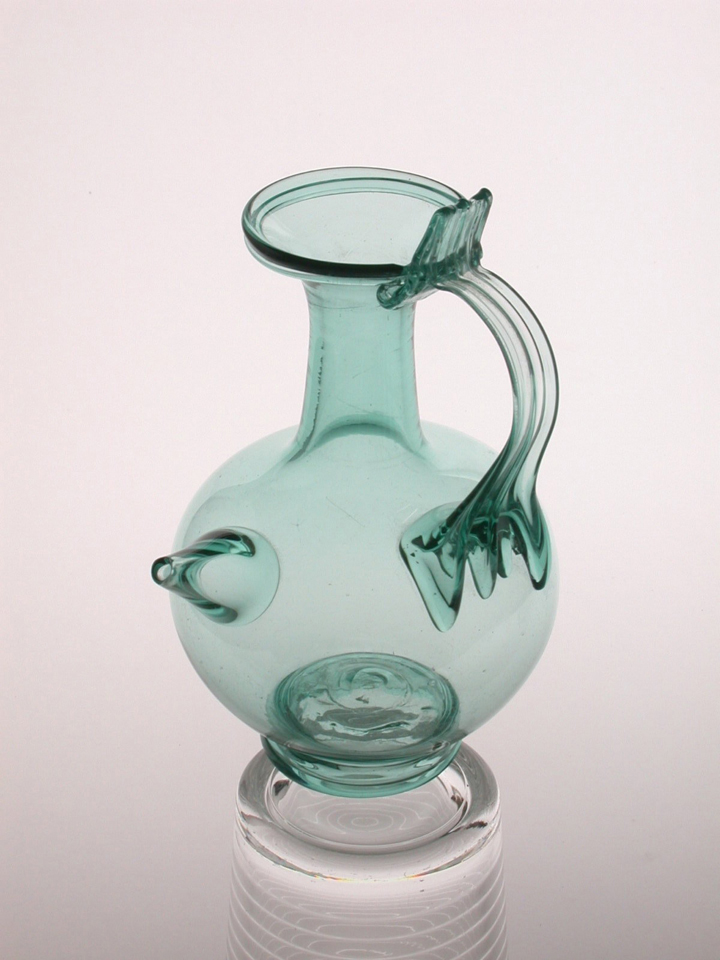
Height:13.5cm
Read More
The Romans used glass more than any other ancient
civilisation. Technical innovation, historical events and changes
in taste developed the industry, and the discovery of glass blowing
was most important. Before this discovery, vessels were made by
casting or slumping into mounds either by pouring molten glass into
pre-heated moulds or by melting powdered glass inside them. Shapes
were also formed around a core of lightly baked clay which was
later dug out. This latter method was for small and expensive
items, such as perfume bottles. Glass blowing – shaping a mass of
molten glass by attaching it to a blowpipe and inflating it – was a
faster process than casting and there were no more limitations on
size.
Glass blowing was established during a period of relative peace and
prosperity after the Civil War in 31 BC. Glass became fashionable
and was admired for its own beautiful qualities. Glass vessels did
not impart a taste or smell and so were perfect for food, drinking
liquids, medicines and perfume.
The glass trade was divided into two distinct jobs. Glassmakers
melted the raw materials, and glassworkers acquired the chunks of
glass and worked them into objects. They would produce their goods
in small workshops and supply local consumers and market
traders.
Excavators of Roman burial sites have found many glass objects as
wealthy Romans were buried with many of their possessions.
Height:13.5cm
Larger Image