
Electric Toaster, 1950s, Original
Description
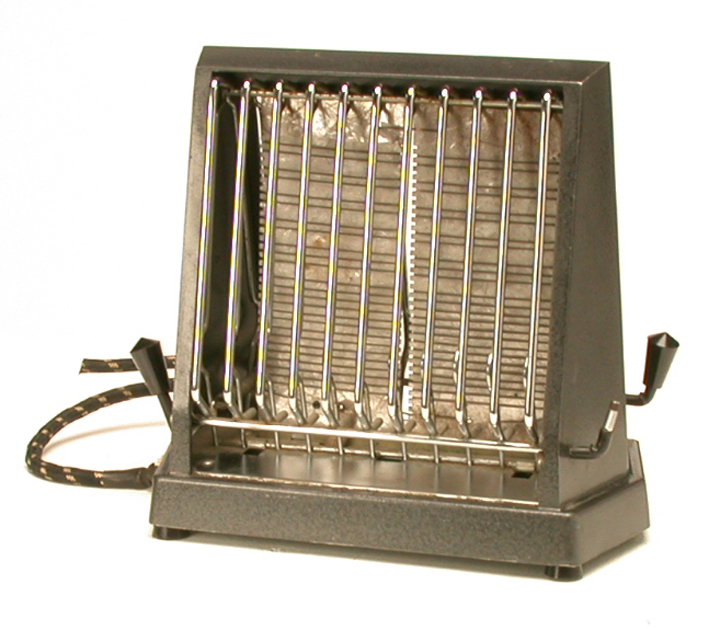
This electric toaster is manually operated. It is metal so would
have been hot to touch after use.
The toaster is basically a rectangular box with two side flaps that
can be pulled down by moving a lever on the shorter side of the
box. The side flaps are made out of thin metal rods so that the
bread inside the toaster can be seen. Inside the box is an element
that would be heated by electricity. The heating elements comprise
a thin metal wire that became red hot, and so toasted the bread.
The bread was sandwiched inside the flaps, with a second interior
set of rods preventing it from falling against the heater.
As bread toasts it gets dry, and tiny crumbs drop off. These can
create a mess if not collected, so underneath the toaster is a
small metal crumb tray. Crumbs can be shaken out when the toaster
is cool enough to hold.
The toaster stands on four small metal legs that would prevent the
heat transferring from the hot toaster to the kitchen worktop.
Height:18cm Base width:11.3cm
Read More
The French designer and architect Le Corbusier once described a
house as a machine for living in, and a kitchen as a laboratory. Up
to the 19th century, the kitchen was the centre of the household
for ordinary families. People used a kitchen as their main living
room. As the 20th century progressed the dining room became an
important space for eating and entertaining, so the kitchen became
a place for cooking and chores. Living styles have changed again
and kitchens have regained a ‘cultural’ space as the place where we
eat and entertain. Open plan and kitchen-dining rooms are favoured
ways of using domestic space. If we live and entertain in our
kitchens, then how our kitchen ‘looks’ becomes important. It shows
off out taste and interests. Kitchen design is now a vital part of
the interior design industry, and people aim for many different
styles for their kitchens, varying from rustic bliss to high tech,
from American diner to Shaker simplicity.
The kitchen is a space where many products jostle for position:
kettles, juicers, toasters, blenders, wine racks, pans, rubbish
bins, can crushers, can openers, vacuums. Buying a toaster is not
just a matter of choosing something that will toast bread
efficiently, but also a style and space choice. Toasters that toast
up to six slices at a time are time saving, but will take up far
more space than one which can does only two at a time.
Designing a toaster involves solutions to style and practical
problems. A toaster will get very hot if used for a long time with
the heat transferring away from the element into the toaster walls,
potentially burning the user. Coolwall toasters have an interior
and exterior wall with a gap in-between to prevent the outer wall
becoming too hot. Bread does not come in one size, so a toaster has
to be able to cope with a variety of size of slice. Not all bread
toasts at the same rate, and people have different preferences,
some liking a light toasting, and some preferring very dark toast.
Toasters now have a timing mechanism so you can select how long to
leave your bread in before it gets to the colour of toast that you
like best.
Eating habits constantly change. The sandwich is now a very popular
way of eating, with toasted sandwiches providing a variation,
particularly with fillings that respond to heat, such as cheese or
tomatoes. More sophisticated toasters can now offer a toasted
sandwich facility to add to the sophistication of the machine.
Height:18cm Base width:11.3cm
Larger Image