
Food Warmer, Victorian, Original
Description
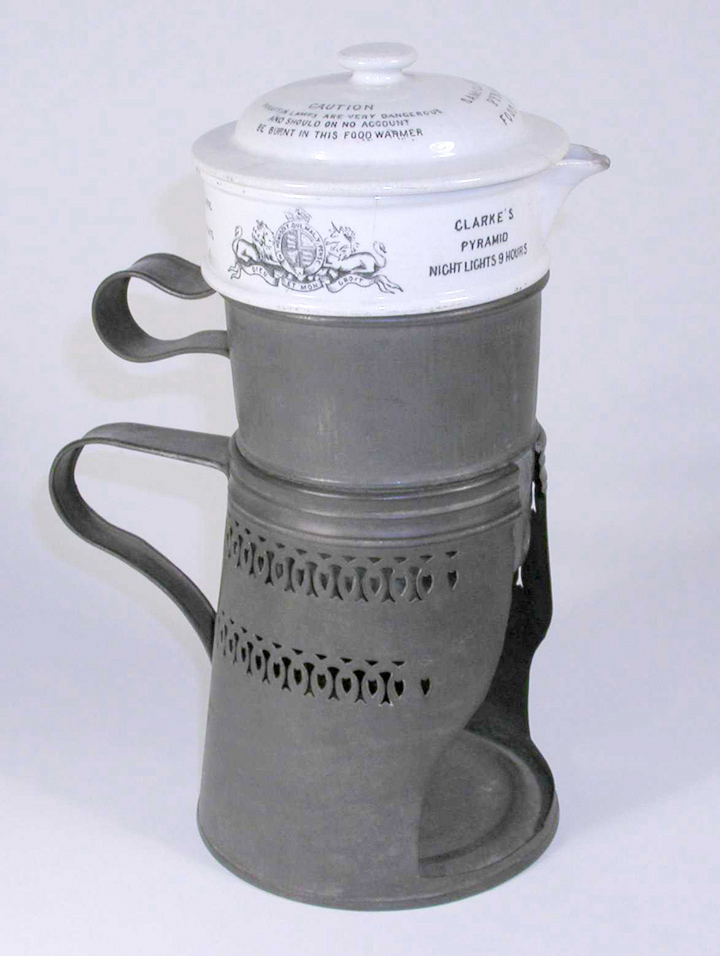
This object is grandly titled, ‘Samuel Clarke’s Pyramid Food
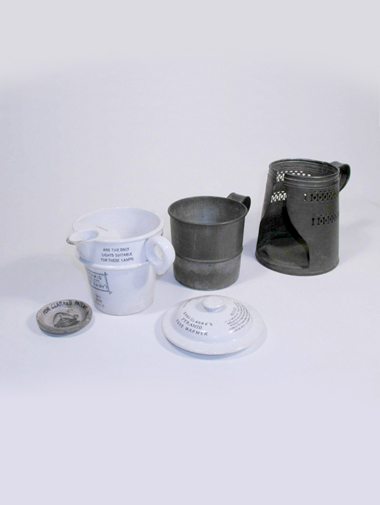
Warmer’. The name describes the way that the three different parts
of the food warmer stack on top of each other. The food warmer was
in common use throughout the 19th century, and this one dates from
the end of the Victorian period. It was usually found in sick rooms
where it was used to keep food warm for invalids so that they could
eat when they felt able. It also doubled up as a night light for
the invalidA person who is sick or chronically ill. and the carer to see in the darkened sick
room.
The food warmer was commonly used to prepare a warm mixture of
flour or bread with diluted milk. This was called papA mixture of diluted milk and bread or flour, sometimes with other ingredients added. It may be sweetened with sugar. and
was fed to babies and invalids. The pap mixture would be put in the
ceramicA type of pottery which is hard and brittle, made by heating clay to a high temperature. container called a pannikinThe part of the food warmer that contains the food. It sits on top of the liner and pedestal. and covered with
a lid. The pannikin sat inside a container of hot water, known as a
linerThe part of the food warmer that sits above the night light, and supports the pannikin. It is made of tin, and the container holds water that heats up and therefore warms the food in the pannikin.. And both the pannikin and liner sat in a pedestal. A
night light at the base of the pedestal heated the water and the
food. The food warmer was rather like a modern day steamer, where
the cooker heats up the pot of water and the steam cooks the food
in the stacked container above.
The food warmer was one of a selection of items, including bedpans
and sputum (spitting) mugs, sold by chemists for use in the sick
room or nursery.
Alternative view
Height:22cm
Read More
The manufacturers wrote on the pannikinThe part of the food warmer that contains the food. It sits on top of the liner and pedestal. as a means of
advertising the product and providing directions on its use. The
blue writing on the pannikin, all in capitals, includes a poem to
advertise Clarke’s night lights, a notice about heating milk and
cleaning the pannikin, a warning about paraffinA liquid obtained from petrol and used as a fuel or solvent in heaters and lamps. Also known as kerosene. lamps, and
lastly, the lion and unicorn coat of arms and banner.
The Samuel Clarke Food Warmer advised customers to use the night
lights manufactured by the same company. ‘Clarke’s pyramid night
lights…9 hours…are the only lights suitable for these lamps.’ A
rhyming poem advertised the night lights: WHEN NIGHTS ARE DARK THEN
THINK OF CLARKE
WHO’S HIT THE MARK PRECISELY;
FOR HIS NIGHT-LIGHTS CREATE LIGHT NIGHTS
IN WHICH YOU SEE QUITE NICELY.There was a warning about using
paraffin oil in the food burner: ‘Caution, Paraffin lamps are very
dangerous, And should on no account, Be burnt in this food warmer.’
At the end of the 19th century, the majority of households used
paraffin or gas lighting. Customers may have been tempted to use
paraffin instead of the recommended night lights, because it was
readily available. This would have been a bad idea because paraffin
was smelly and the fumes would have made the invalidA person who is sick or chronically ill. feel
even worse.
On the side of the pannikin a notice cautioned, ‘It is important
that the milk should be boiled as soon as it is received from the
dairy or it is liable to turn sour.’ Milk becomes sour after a few
days as the yeast ferments. In 1865 Louis Pasteur1822-1895 – French scientist. He developed the process of pasteurisation to destroy disease-causing bacteria in milk and he invented vaccinations to protect people against viral diseases.
demonstrated that heating milk would prevent it turning sour, and
would also kill the tuberculosis bacteria. This process was known
as pasteurisationThe treatment of milk to destroy disease-causing bacteria by heating it to a temperature of 60 degrees for 30 minutes. Named after Louis Pasteur, the French chemist who discovered the process in 1865..
The Victorians became more aware of the need for hygiene and
sanitation at the end of the century. Along with Pasteur’s
revelation that germs were the cause of disease, there was an
improvement in sanitation with the provision of clean water and
public health measures. Victorians recognised that disease could be
avoided by washing things with clean water. The directions on the
side of the pannikin recommended that, ‘The pannikin should also be
well cleansed prior to use.’
The lion and unicorn coat of arms on the pannikin is a version of
the royal coat of arms and implies that the company was patronised
by the royal family. The coat of arms contains the inscription,
‘Dieu et mon droit’ meaning ‘God on my right.’ The second French
phrase, ‘Honi soit qui mal y pense’ means ‘Evil to him who evil
thinks.’
The food warmer was often used in conjunction with feeding
boatA container shaped like a gravy boat, used to feed invalids and infants.s and feeding cupA cup with a half-covered opening, a handle and a long spout, which could be used by invalids and infants to take liquid foods.s to serve food to babies and
invalids. A wealthy family caring for a sick relative at home would
have used the food warmer. Poor families would not have owned a
special device to heat food in a small container. Instead, they
would have heated food on a stove, or not at all.
Height:22cm
Larger Image
Glossary
- Ceramic
- A type of pottery which is hard and brittle, made by heating clay to a high temperature.
- Feeding boat
- A container shaped like a gravy boat, used to feed invalids and infants.
- Feeding cup
- A cup with a half-covered opening, a handle and a long spout, which could be used by invalids and infants to take liquid foods.
- Invalid
- A person who is sick or chronically ill.
- Liner
- The part of the food warmer that sits above the night light, and supports the pannikin. It is made of tin, and the container holds water that heats up and therefore warms the food in the pannikin.
- Louis Pasteur
- 1822-1895 – French scientist. He developed the process of pasteurisation to destroy disease-causing bacteria in milk and he invented vaccinations to protect people against viral diseases.
- Pannikin
- The part of the food warmer that contains the food. It sits on top of the liner and pedestal.
- Pap
- A mixture of diluted milk and bread or flour, sometimes with other ingredients added. It may be sweetened with sugar.
- Paraffin
- A liquid obtained from petrol and used as a fuel or solvent in heaters and lamps. Also known as kerosene.
- Pasteurisation
- The treatment of milk to destroy disease-causing bacteria by heating it to a temperature of 60 degrees for 30 minutes. Named after Louis Pasteur, the French chemist who discovered the process in 1865.