
Helmet & All Clear Sign, World War II, Original
Description
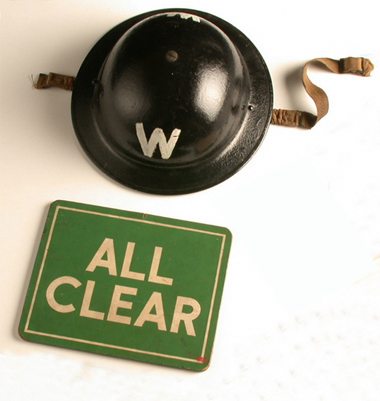
An Air Raid Precautions (ARP) warden wore this helmet during World
War II, when Britain was bombed by the German Air Force. The heavy,
steel helmet protected the head from falling bricks and debris.
And, in a bomb blast, it protected the warden from flying rubble
and glass.
Air Raid Precautions prepared and protected civilians from German
air raidsAn attack by enemy aircraft in which bombs are dropped. There were air raids on the British population in WWII.. ARP included setting up shelters, information on
what to do in an air raid, and providing equipment, such as gas
masks, for use during an attack.
ARP wardens were volunteers. They took charge during air
raids, shepherding people into the shelters, helping casualties,
and dealing with any problems. They had to put out fires and rescue
people from the rubble of their homes. They also patrolled the
streets at night, making sure that house lights could not be seen.
The ‘blackout’ was to prevent any lights attracting the German
bombers.
The warden’s helmet is black, and was worn with dark coloured
clothes. A large W helped people recognise the warden during air
raids, or when he or she went from house to house, checking lights,
counting the number of people, and making sure that there was a
safe room and fire bucket in each house.
The sign
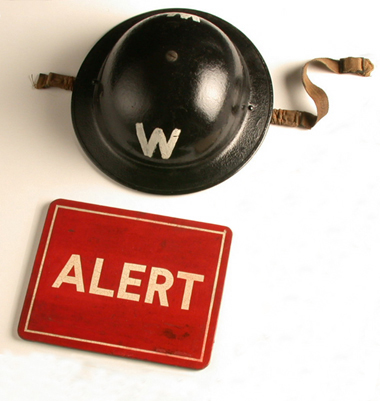
The sign has ‘AlertThe signal used to warn of danger.‘ in red on one side and ‘All
ClearThe signal that danger is over.‘ in green on the other. The ARP warden used it in an air
raid to warn people when an attack was in progress and to let them
know when it was over. As well as signs, there were audible
signals. Hooters and sirens sounded the ‘alert’ at the beginning of
an air raid and the ‘all clear’ at the end.
Alternative view
Helmet Length:31cm
Read More
Air raids took place throughout the war and over 60,000 people
died. The heaviest attacks were from 1940 to 1941 when the Germans
bombed London more than 50 nights in a row in the BlitzThe Blitz – the systematic bombing of British cities in 1940-41 by the German Air Force..
Each London borough had a Chief Warden. Every borough was divided
into districts, and again into streets. Air Raid Precautions (ARP)
wardens were appointed for every street. They had the job of
checking that people followed ARP, and they patrolled their streets
regularly.
Wardens also inspected houses. Fires could start after a bomb had
exploded. The ARP wardens checked that people had cleared
wood from their attics, and that they kept a store of water ready
in baths and buckets to put out any fires. It was essential that
there was a shelter or safe room in each house for the family to go
to if there was an air raid in the middle of the night, and wardens
checked on this too. Wardens kept a tally on how many people were
sleeping in each house every night because they had to check that
everyone was accounted for after an attack. With all this checking
up, it is no wonder that wardens were often accused of interfering
in people’s lives!
The warbling signal of the air raid siren or the (intermittent)
blasts of a hooter would warn people of an air raid. Everyone would
head for the nearest shelter with his or her gas mask and identity
card. Wardens would direct people to the shelter and check that
everyone made it there safely. Then everyone would wait for the air
raid to finish, emerging from the shelter when the ARP
wardenThe person responsible for ensuring that people took precautions against air raids e.g. checking that lights couldn't be seen, that people carried their gas masks. The wardens also took charge during air raids, ushering people into shelters, dealing with the aftermath of explosions and reporting attacks. sounded the continuous siren or rang the hand bell to
signal the All ClearThe signal that danger is over..
After a bomb exploded the ARP wardens reported it to their local
posts and worked out what help was needed. They helped people at
the scene -rescuing people from wrecked buildings, looking after
the shocked and wounded, putting out or managing small fires,
directing those who had been made homeless to the nearest rest
centre and dealing with unexploded bombs (UXB) – until the
emergency services arrived. The wardens wrote incident reports on
the type of bomb, the time of the attack, the people hurt and the
damage done.
As well as the air raid warning signs, the ARP wardens had rattles
to signal a poison gas attack and a bell to ring when it was over.
They had hand-pumps and buckets for putting out small fires and
hooks to pull down damaged ceilings. Other pieces of equipment
included whistles and ‘civilian duty’ respirators.
The steel helmet was part of the Warden’s protective clothing,
along with wellington boots to guard the legs in case mustard gas
was used. ARP Wardens wore one-piece boiler suits in dark blue or
their own clothes, with an ‘ARP’ armband and silver badge. Men
could wear woollen serge battledress (waist-length jacket and
trousers.) Women could wear jackets with trousers or a skirt, or
battledress blouses with ties.
Helmet Length:31cm
Larger Image
Glossary
- Air raids
- An attack by enemy aircraft in which bombs are dropped. There were air raids on the British population in WWII.
- Alert
- The signal used to warn of danger.
- All clear
- The signal that danger is over.
- ARP warden
- The person responsible for ensuring that people took precautions against air raids e.g. checking that lights couldn’t be seen, that people carried their gas masks. The wardens also took charge during air raids, ushering people into shelters, dealing with the aftermath of explosions and reporting attacks.
- Blitz
- The Blitz – the systematic bombing of British cities in 1940-41 by the German Air Force.