
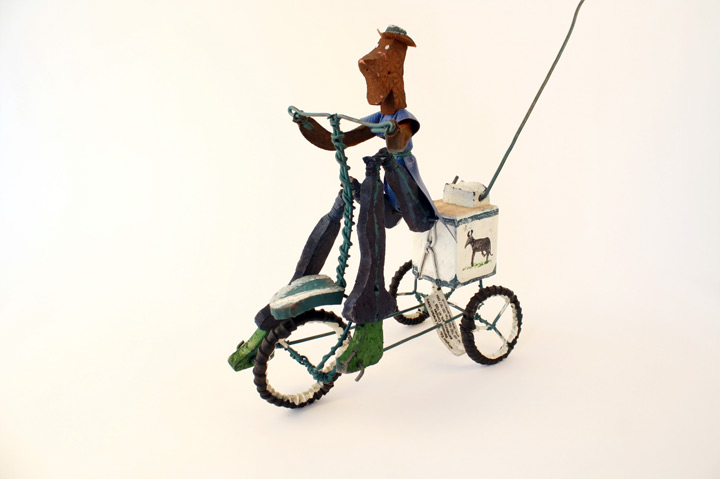
Ice Cream Cyclist, Reused Materials, Zimbabwe
Description
Push-along toys made of wire are popular throughout Africa,
especially in the southern African countries of Malawi, South
Africa, Botswana and Zimbabwe. This long-legged ice cream seller is
from Zimbabwe. It is made from recycled wire, foam, plastic and
wood and is a brilliant piece of design.
The maker needs to have a clear idea of how the toy is going to
move before beginning to design the component parts. If you think
about it, often the ice cream cart is in the front of the bicycle
frame as it is in the Playmobil version. In this case, the ice
cream cart is mounted on the extended tricycle frame. The frame and
the push-along handle are made of wire, the bicycle wheels are made
of wire with an extra wrapping of wire to create the rough texture
of tyres, the body and front mudguard are made of foam, the jacket
and hat are made of plastic, and the cart is made of wood – all
materials found and reused. The tyres, painted white on the inside,
allow the toy to be pushed on a rough surface. The cart is painted
white with a painting of a cow with full udders on green grass to
advertise the fact that it is ice cream that is being sold by this
street vendor.
The structure of this toy, with the long bike frame and
elongated limbs and face of the seller, is elegant, appealing and
shows the maker’s sense of fun. Toys like this now sell well in the
international market and are often the source of income for the
makers through various fairtrade schemes. However, simple
push-along toys (sometimes called galimotos, the word for
car in Chichewa, the language of Malawi) are still seen enjoyed by
children in African countries, most frequently in rural areas.
Height:28cm Width:21cm
Larger Image
Moving Object
Push-along toys made of wire are popular throughout Africa,
especially in the southern African countries of Malawi, South
Africa, Botswana and Zimbabwe. This long-legged ice cream seller is
from Zimbabwe. It is made from recycled wire, foam, plastic and
wood and is a brilliant piece of design.
The maker needs to have a clear idea of how the toy is going to
move before beginning to design the component parts. If you think
about it, often the ice cream cart is in the front of the bicycle
frame as it is in the Playmobil version. In this case, the ice
cream cart is mounted on the extended tricycle frame. The frame and
the push-along handle are made of wire, the bicycle wheels are made
of wire with an extra wrapping of wire to create the rough texture
of tyres, the body and front mudguard are made of foam, the jacket
and hat are made of plastic, and the cart is made of wood – all
materials found and reused. The tyres, painted white on the inside,
allow the toy to be pushed on a rough surface. The cart is painted
white with a painting of a cow with full udders on green grass to
advertise the fact that it is ice cream that is being sold by this
street vendor.
The structure of this toy, with the long bike frame and
elongated limbs and face of the seller, is elegant, appealing and
shows the maker’s sense of fun. Toys like this now sell well in the
international market and are often the source of income for the
makers through various fairtrade schemes. However, simple
push-along toys (sometimes called galimotos, the word for
car in Chichewa, the language of Malawi) are still seen enjoyed by
children in African countries, most frequently in rural areas.