
Utility Fur Shoulder Cape, 1940s, Original
Description
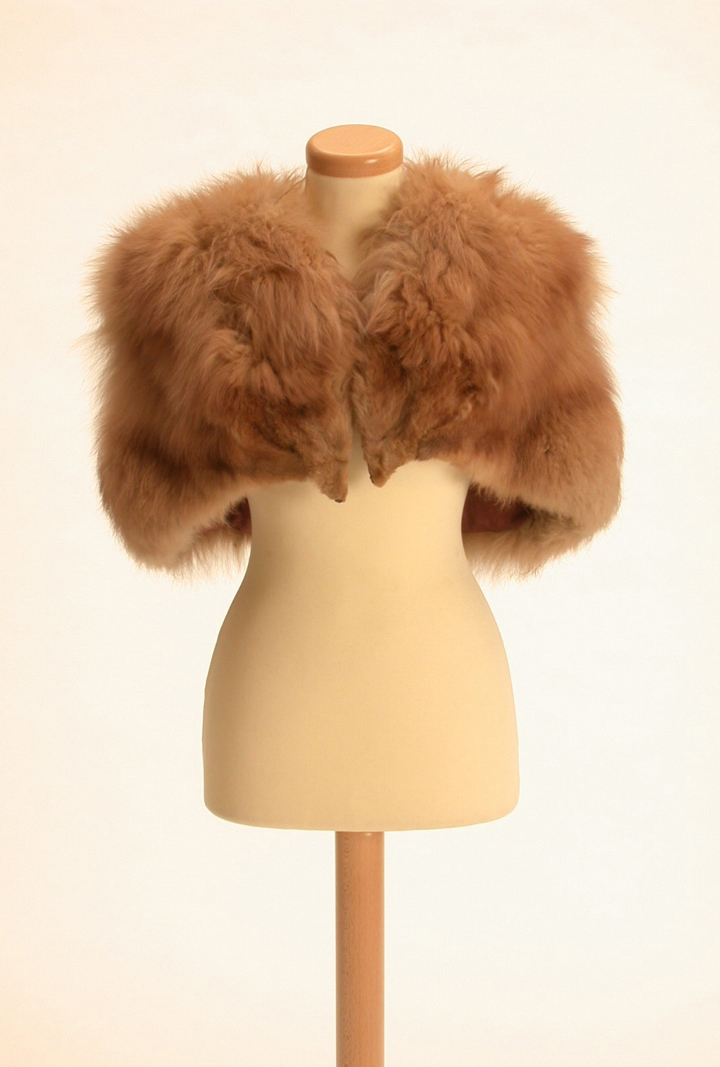
This red fox fur capeA short sleeveless cloak. dates from the 1940s. Today,
many people believe that it is wrong to kill animals for their fur,
and there are campaigns against buying and wearing clothes made
from real fur. But in the 1930s and 1940s it was acceptable to wear
fur, and fur coats and capes were seen as the height of luxury and
glamour. Film stars and royalty wore fur and set the fashion for
everyone else. A fur shoulder cape would have been desired and much
admired in those days. But not everyone could afford fur – only
people with a lot of money could buy an expensive fur cape or coat.
So it is likely that a wealthy woman owned this shoulder cape.
This fox fur is called a Utility Fur Shoulder Cape because it was
made under the Utility Scheme1942-52 – government regulations to ensure that garments were made as economically as possible during the war years. The Utility Scheme also applied to furniture and other household goods – there were rules about the kinds of materials that could be used and the design had to be kept simple.. This scheme was introduced in
1941 when the government rationed clothes. Since there was less
material available, clothes had to be simpler and plainer in
design. The government provided clothes patterns to tailors and
factories to make clothes that followed their rules. The rules
limited the amount of material that could be used, along with a
limit on the number of buttons, pleats and pockets. It is
surprising that this fur is a Utility garment because the rules
banned fur garments and even the use of fur to trim and decorate
clothes!
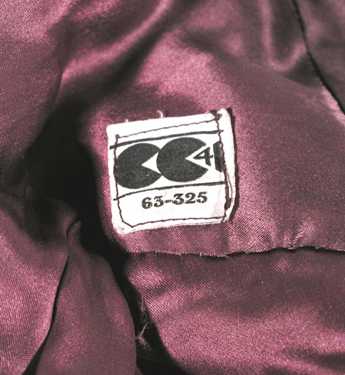
On the lining inside the cape is the label ‘CC41CC41 – Civilian Clothing 1941 – symbol on label of clothes designed by London fashion designers under the Utility Scheme. The designs followed rules about the amount of material and trimming that could be used.‘ which
stands for Civilian Clothing 1941. This shows that the fur was made
from a government-approved pattern in 1941. The government involved
famous fashion designers to make the Utility designs popular.
Hardy Amies1909- 2003 – London fashion designer who had his own fashion house and designed clothes for the government's Utility Scheme during WWII. He was famous for understated tailoring and regal ball gowns, and became the royal dressmaker in 1948. and Norman Hartnell1901-79 – London fashion designer who had his own fashion house and designed clothes for the government's Utility Scheme during WWII. Notably, he became the royal dressmaker in 1938 and designed Queen Elizabeth's Coronation gown. were among those
1940s designers who created streamlined and stylish clothes with
the CC41 Utility Mark.
Alternative view
Read More
Fur is an animal skin with fur fibres, and people have used animal
fur to dress and protect themselves from the wind and cold for
thousands of years. Fur mainly comes from Europe, Russia and North
America, as these are the places where furry mammalsWarm-blooded animals e.g. dogs, cats, humans, mink, fox etc./animals
can be found. Red foxes live in Europe and North America, and this
fur comes from one of these places.
An animal peltThe skin or fur of an animal. has to go through several processes to become
a piece of clothing. First the skins are scraped, and soaked in
solutions to clean and soften them. Then chemicals are added to
preserve the fur. Afterwards, the fur is dried and stretched. This
capeA short sleeveless cloak. is actually made of several thin strips of fur cut from
a pelt and then stitched back together to give the cape its shape.
If you look closely you can see where the pieces are joined
together. Lastly the lining is sewn in and the fur is hand combed
to finish it off.
Furs are made by hand and it is a skilful job. The fur trade is
mainly made up of small family-run businesses of craftsmen. It can
take months to make a fine coat from start to finish. Because of
the work involved and the uniqueness of each piece of clothing,
furs are expensive. In the 1940s they were associated with a rich,
glamorous lifestyle and the fur was very fashionable. Sable,
minkThe fur of the mink – a mammal that looks like a large stoat, and lives in Europe, Asia and North America., chinchillaThe soft silvery-grey fur of a small rodent from South America. and silver fox were some of the
animal furs in demand.
Fur came in different forms throughout the 1940s. There were long
coats that fell below the knee and capes that covered the
shoulders. WrapsWrap – a long broad piece of material worn round the shoulders, folding in front. were broad bands of fur, draped around the
shoulders and folded in front. StoleA scarf or shawl worn over the shoulders.s dressed the collars of
jackets – these were pelts, with the animal head at one end and the
tail at the other. Today we would probably be shocked at the sight
of a fox’s head on someone’s collar, but during the war these were
all the rage!
Furs were worn widely, both during the day and in the evening.
During the day this cape would have been worn with a smart suit.
Throughout the war the fashion was for tight-fitting military style
suits. Women wore boxy jackets, with padded shoulders and narrow
waists, and straight skirts that rose to the knee. This fur cape
would have been worn over the jacket, and the woman would have
finished off her outfit with a hat and gloves. In the evening, the
fur shoulder cape would have been a glamorous and warm over a
close-fitting ‘sheathA close-fitting evening dress fashionable in the 1940s.‘ evening dress, heels and long evening
gloves.
During WW2 there was a shortage of material for clothes. The
government rationed clothes so that people had to hand in
coupons every time they bought something on the list of rationed
goods. Wool, cotton and satin clothes were strictly rationed. Fur
wasn’t on the list of rationed items – it had always been a luxury
item and few people were able to afford it anyway. The government’s
Utility Scheme1942-52 – government regulations to ensure that garments were made as economically as possible during the war years. The Utility Scheme also applied to furniture and other household goods – there were rules about the kinds of materials that could be used and the design had to be kept simple. was a way of making sure that the design of
clothes was as trim and economic as possible. Although fur wasn’t
allowed as decoration on clothes, within the scheme there were
haute coutureA French expression meaning high fashion. Couture originally meant sewing or needlework, while haute means high. garments (high fashion, one-off designs) for
those who could afford them. This fur cape may have been one such
design.
Larger Image
Glossary
- Cape
- A short sleeveless cloak.
- CC41
- CC41 – Civilian Clothing 1941 – symbol on label of clothes designed by London fashion designers under the Utility Scheme. The designs followed rules about the amount of material and trimming that could be used.
- Chinchilla
- The soft silvery-grey fur of a small rodent from South America.
- Hardy Amies
- 1909- 2003 – London fashion designer who had his own fashion house and designed clothes for the government’s Utility Scheme during WWII. He was famous for understated tailoring and regal ball gowns, and became the royal dressmaker in 1948.
- Haute couture
- A French expression meaning high fashion. Couture originally meant sewing or needlework, while haute means high.
- Mammals
- Warm-blooded animals e.g. dogs, cats, humans, mink, fox etc.
- Mink
- The fur of the mink – a mammal that looks like a large stoat, and lives in Europe, Asia and North America.
- Norman Hartnell
- 1901-79 – London fashion designer who had his own fashion house and designed clothes for the government’s Utility Scheme during WWII. Notably, he became the royal dressmaker in 1938 and designed Queen Elizabeth’s Coronation gown.
- Pelt
- The skin or fur of an animal.
- Sheath
- A close-fitting evening dress fashionable in the 1940s.
- Stole
- A scarf or shawl worn over the shoulders.
- Utility scheme
- 1942-52 – government regulations to ensure that garments were made as economically as possible during the war years. The Utility Scheme also applied to furniture and other household goods – there were rules about the kinds of materials that could be used and the design had to be kept simple.
- Wraps
- Wrap – a long broad piece of material worn round the shoulders, folding in front.