
Watering Jug, Tudor, Replica
Description
A common sight during the summer months is a hosepipe and a water
sprinkler keeping cricket pitches, crops, allotments and gardens
watered during dry periods. For smaller areas such as a window box
or a patio tub, a watering can is the solution to transporting
water. It is a major challenge to create a container that does not
get too heavy when it is full of water but that will hold enough
water to make the journey worthwhile.
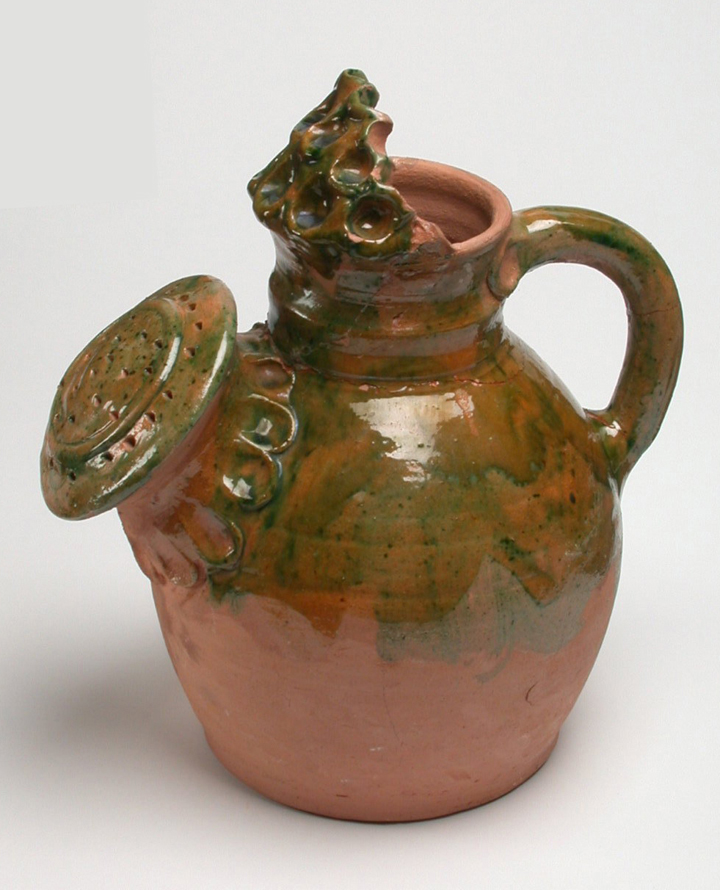
This Tudor watering bottle is made of clay, and was hand thrown
with a rough and partial green glaze. On the front of the bottle is
a rose, a circular area pierced with tiny holes, to allow water to
pour out gently in order not to flood delicate seedlings. On the
other side of the pot there is a handle that allows the carrier to
get a firm grip with one hand. The top of the pot is narrow, with a
wall pressed out of the clay to form a rough decoration. This
prevented water pouring out of the top of the bottle when it was
tipped up when very full. The watering bottle holds 3.46 litres of
water and would have been filled by a bucket from the well.
Height:31cm
Read More
Both wealthy and poorer households in Tudor times grew plants.
Vegetable, or kitchen gardens are the earliest types of garden, and
families grew vegetables and edible plants to supplement their
diet, particularly poorer families. The main fruit and vegetable
crop was harvested in the autumn.
The Tudor garden contained vegetables, herbs and flowers.
Vegetables included leeks, garlic, peas, parsnips, lentils,
turnips, beans, onions and spinach. They were not eaten to
accompany meat, and very few wealthy people ate any vegetables.
Vegetables were used to make pottage, a soup-like meal using milk,
eggs and breadcrumbs.
Some flowers were used in food dishes, including violets,
primroses, marigolds and lavender. Marigolds were used to give
butter a brighter colour if it was too pale for the local
market.
There were many more varieties of apples, pears and cherries grown,
and other popular fruits included strawberries and
gooseberries.
A wealthy household would have a large kitchen garden, not only for
food supplies, but to grow more exotic and experimental plant
species. The grounds could also include a dovecote, a lake large
enough to store live fish, beehives, or skeps, an orchard, a still
house for distilling herbs, and a verjuice house for making a
vinegar-like liquid from cider apple juice.
A Tudor innovation was the Knot Garden. These were small ornamental
spaces, geometric and symmetrical, bordered by dwarf box hedging.
They were called knot gardens after the knot and strap work
patterns from contemporary English needlework. Threads used in
needlework follow a regular over and under weave, and hedges of a
variety of species and colours were planted to attempt to copy the
over and under woven shape.
Inside each boxed area of hedging, gardeners placed mulches, or
gravel or tiny plants. It was the hedges, however, that were the
focus, not the internal planting arrangement. Knot Gardens were
best viewed from above.
Monasteries contributed to garden development by creating herb, or
physic gardens. The monks not only cultivated medicinal and
culinary plants, but also researched into growing methods, and the
benefits of growing different seeds in a variety of conditions.
Thyme was used as a sedative, Sweet Cicely to aid digestion, and
Angelica to cure colic.
Wherever people have cultivated the ground, for pleasure or
necessity, they have needed tools. Each tool has its own problem to
solve, or task to fulfil. Many of the tools the Tudors worked with
are still used by us today, although the introduction of plastic in
the twentieth century has allowed watering cans and wheelbarrows to
be produced in a lighter material for ease of lifting and pushing.
Rakes, forks, spades and axes remain almost unchanged. Tools such
as scythes, designed to cut grass, have been replaced by the
development of the lawn mower.
Height:31cm
Larger Image